
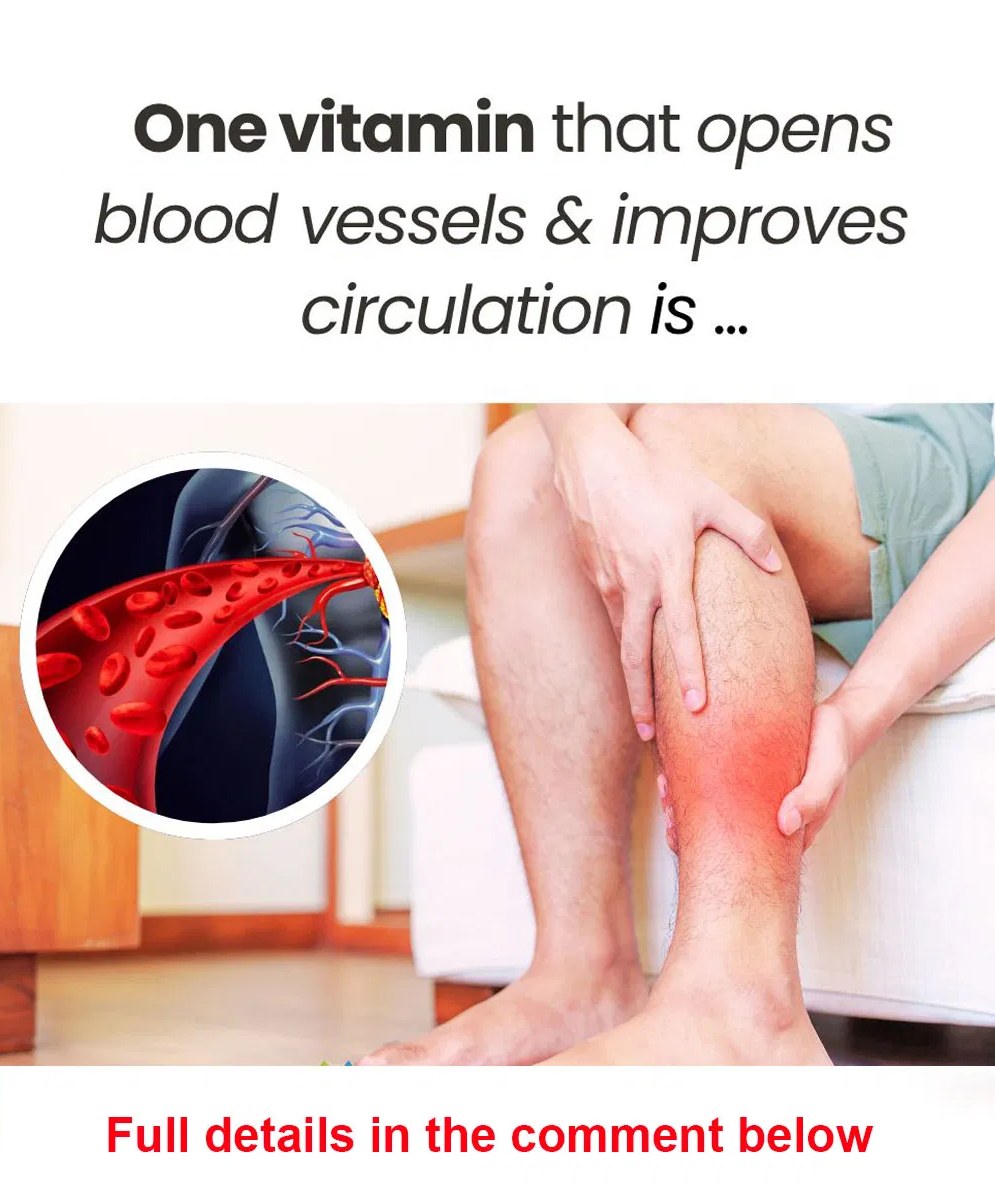
As we age, our bodies naturally begin to change—and so do our health priorities. One of the most overlooked areas is blood circulation, especially in the legs and feet. Poor circulation doesn’t always come with warning signs, but it can lead to serious complications if ignored.
In this article, we’ll introduce you to a powerful vitamin that may help you avoid circulation issues, support heart health, and improve mobility: niacin, also known as Vitamin B3.
What Is Niacin (Vitamin B3)?
Niacin is a B-complex vitamin that plays a vital role in energy production, cholesterol regulation, and—most importantly for this topic—blood vessel health. As a vasodilator, niacin helps widen blood vessels, which allows blood to flow more freely, especially to the lower limbs.
Niacin also reduces inflammation in the blood vessels and supports the repair of damaged tissue, all of which are crucial as we age.
Why Niacin Becomes Even More Important After 50
Once you reach your 50s, your cardiovascular system starts to change. Arteries may stiffen, circulation can slow, and the risk of blockages increases—often without noticeable symptoms until problems become serious.


 \n
\n
\n
\n