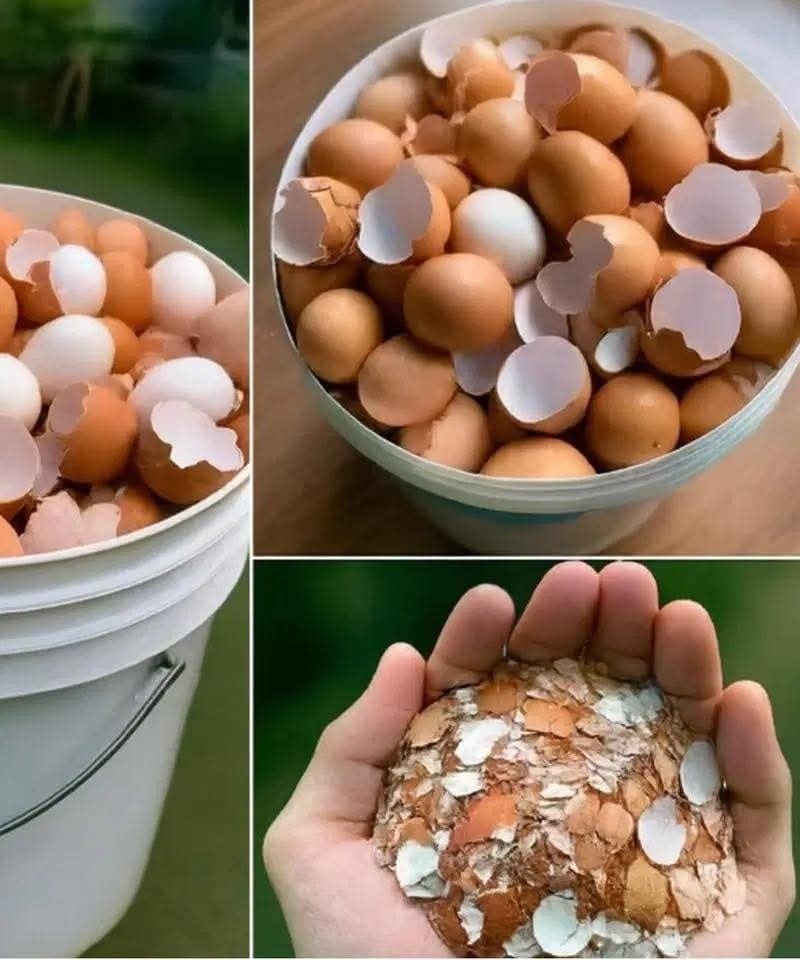
Have a look through this list below — and don’t forget to share it with your friends so they, too, can put their eggshells to good use.
They’ll appreciate it!
🥄 1. How to Eat Eggshells Safely
🧪 What’s in Eggshells?
Eggshells are made up of about 95% calcium carbonate, the same mineral found in many calcium supplements. They also contain trace minerals like magnesium, phosphorus, and potassium.
That means eggshells can be a natural and sustainable source of calcium — if prepared correctly.
⚠️ Why Preparation Matters
Raw or unwashed shells can carry Salmonella and other harmful bacteria. That’s why proper sterilization is key.
✅ Safe Way to Prepare Edible Eggshells
1. Wash thoroughly
Rinse the shells under warm water to remove any egg residue.
You can also soak them briefly in vinegar or boiling water to disinfect.
2. Boil for at least 10 minutes
Keep the shells in boiling water for 10 minutes to kill any bacteria.
3. Bake to dry (optional but better)
After boiling, spread the shells on a tray and bake them at 100–120°C (210–250°F) for 10–15 minutes.
This makes them brittle, dry, and sterile.
4. Grind into a fine powder
Use a coffee grinder or blender. Never eat sharp shell pieces — they can injure your throat or digestive tract.
5. Store properly
Place the powder in an airtight jar away from humidity.
🥄 How to Use Eggshell Powder
Add a small pinch (about ½ teaspoon) to smoothies, yogurt, soups, or oatmeal.
Don’t exceed 1 teaspoon per day, as too much calcium may cause kidney stones or reduce magnesium absorption.
❌ Avoid Doing This
-
Don’t eat raw or unboiled shells.
-
Don’t chew them directly.
-
Don’t replace your calcium supplements without medical advice.
Recent Articles